Live on Google Meet. Zoom/Teams demos this week.
Try it free for 2 weeks. No card. Limited spots.
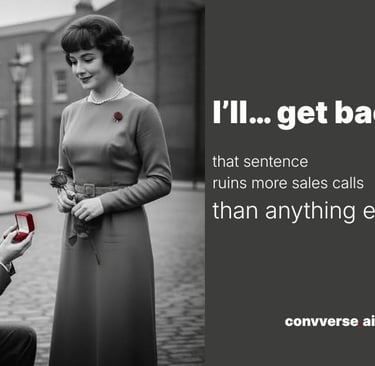
Why “I’ll get back to you” is the most expensive sentence in sales
A closer look at how delayed responses in sales lead to lost momentum, lower trust, longer deal cycles, and reduced win rates and how teams can prevent it.
REALTIME SELLING
Mukesh Kumar, Founder of convverse.ai
12/23/20251 min read

Every sales rep has said it.
“Let me get back to you.”
It sounds harmless. Responsible, even.
But in most deals, it’s the moment momentum quietly leaks out.
Not because the rep is lazy.
Because sales is a game of moments, and that moment just passed.
When a buyer asks a question during a live call, they are not just seeking information. They are testing confidence, clarity, and fit. They are deciding whether you understand their world well enough to keep listening.
When the answer becomes “I’ll get back to you,” three things happen at once.
First, the energy drops.
Second, the buyer fills the gap on their own, often by Googling or calling another vendor.
Third, your position subtly shifts from guide to follower.
The irony is that most follow-ups are solid. The answer eventually sent is usually correct. But the decision was already influenced earlier.
Sales is not lost in the email that never gets a reply.
It is lost in the call where the momentum breaks.
Great reps don’t win because they know everything. They win because they can stay present, ask the right follow-up, and keep the conversation moving forward.
This is why “I’ll get back to you” is expensive.
It doesn’t just delay information. It delays conviction.
The best teams are now designing their sales motion around this reality. They are reducing the number of moments where a rep has to pause, search, or defer.
Because in sales, the deal rarely waits for your follow-up.